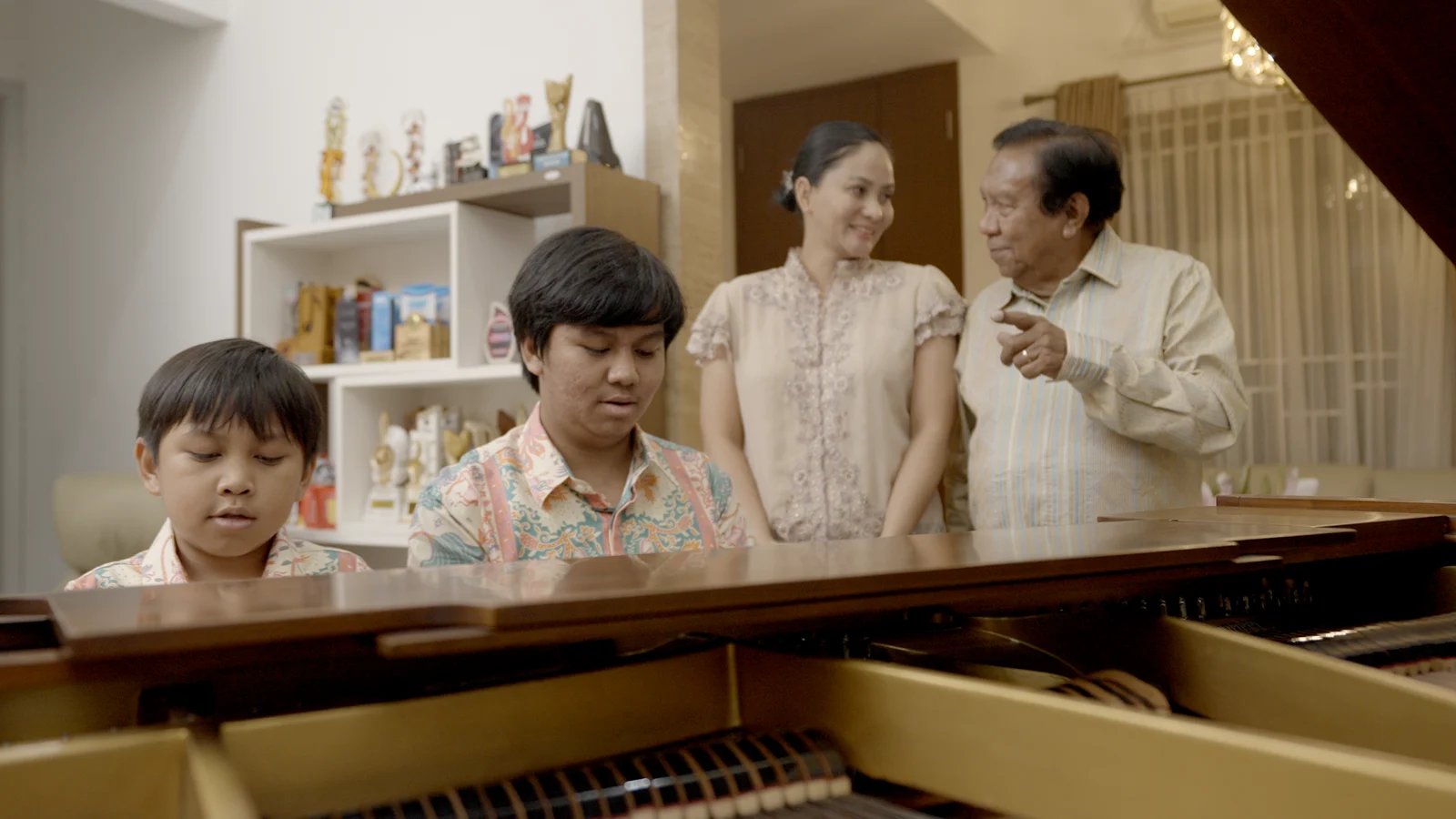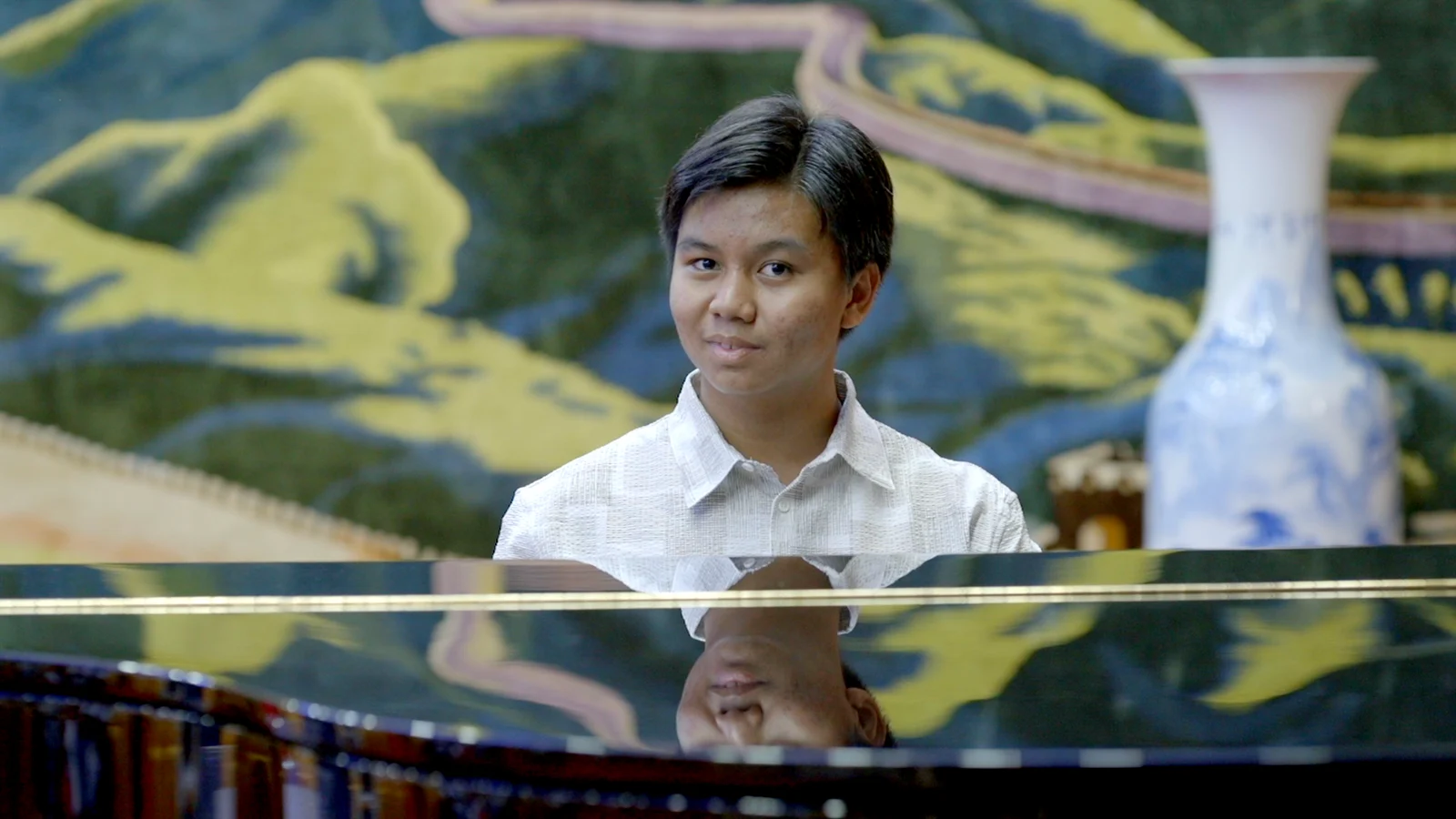
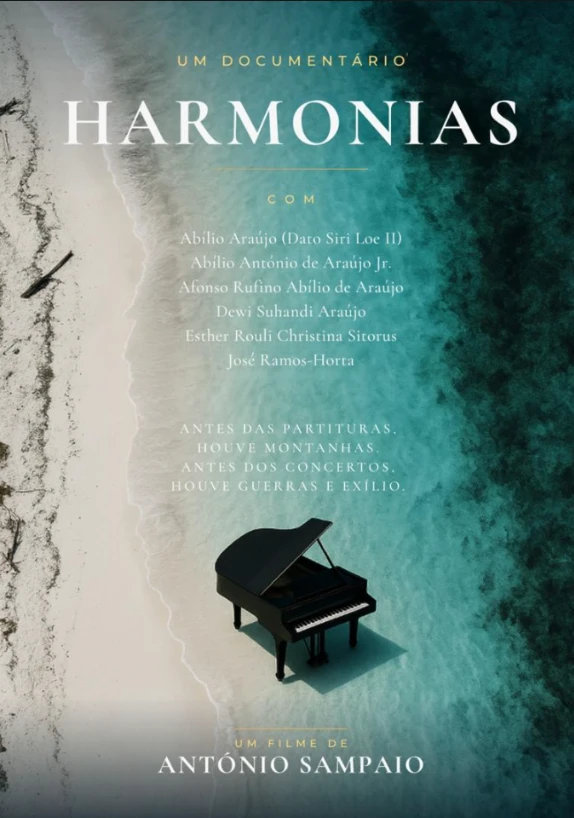
The older brother
Abílio António de Araújo Jr.
Articulate, ironic and ambitious. Between dreams of becoming a pilot, a businessman and a politician, Abílio looks for his place — and finds both a challenge and an inspiration in his younger brother.
One family. Two generations. A shared melody.
A film by António Sampaio
From father to sons
Abílio, Afonso and the music running through their family. A story of togetherness, discovery and roots in Timor-Leste.
Step into their story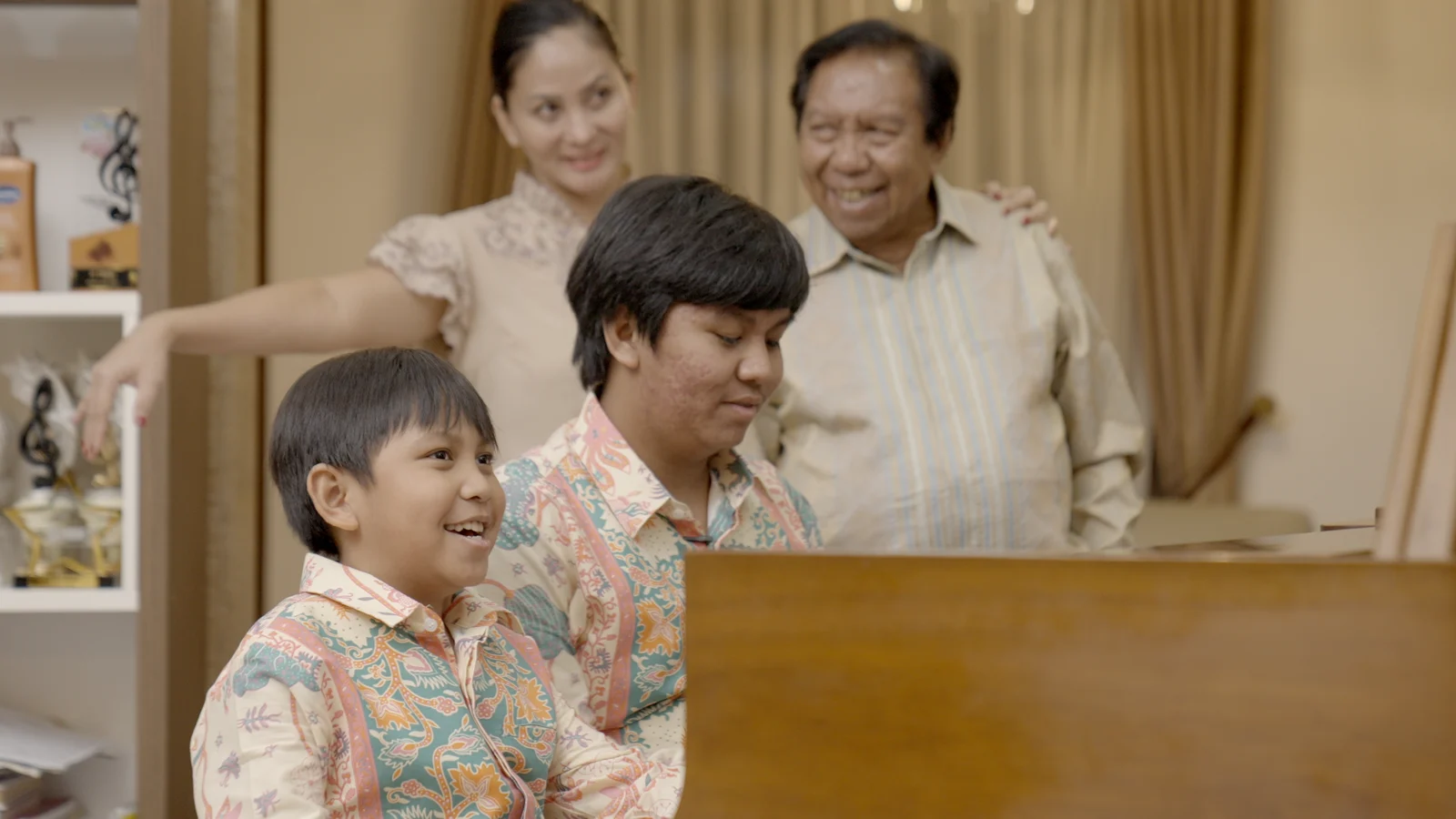
Before you read, listen.
Two performances. Two personalities.Memories of Timor-Leste. New melodies in Jakarta.
01 / The film
TIMOR-LESTE / JAKARTATwo brothers, aged 14 and 8, play Chopin in Jakarta carrying the name and the blood of Timor-Leste. Their father composed songs of war. Their mother dreams of seeing one of them become prime minister.
Harmonias is the portrait of a legacy that is both learned and inherited at the piano. From the practice rooms of Jakarta to the mountains of Timor-Leste, it follows Abílio and Afonso through daily discipline, brotherhood and a history larger than themselves.
In October 1971, on the eve of leaving for Lisbon, a young man sat at night on the walls of the Aipelo prison, where his grandfather had died, and swore he would return. Almost fifty years later, his two sons play Chopin in front of the President of the Republic.
Abílio António de Araújo Jr. and Afonso Rufino Abílio de Araújo are two young pianists raised in Jakarta with roots in Timor-Leste. The older one analyses, the younger one feels. Rivals and protectors, they are finding their own way through music.
Around them are the voices of those who shaped them and those who love them: their father, composer of the FALINTIL anthem and “Foho Ramelau”; their mother, who oversees their daily practice; their teacher Esther, who insists that technique without meaning is empty; and José Ramos-Horta, who receives them at the Presidential Palace.
Between daily discipline and the weight of a history they do not yet fully grasp, Abílio and Afonso are writing their own melody. Because tradition, the film suggests, is not a burden. It is an echo.
02 / Biographies
The brothers, their father, the people around them. Each voice reveals another part of the story.
Articulate, ironic and ambitious. Between dreams of becoming a pilot, a businessman and a politician, Abílio looks for his place — and finds both a challenge and an inspiration in his younger brother.
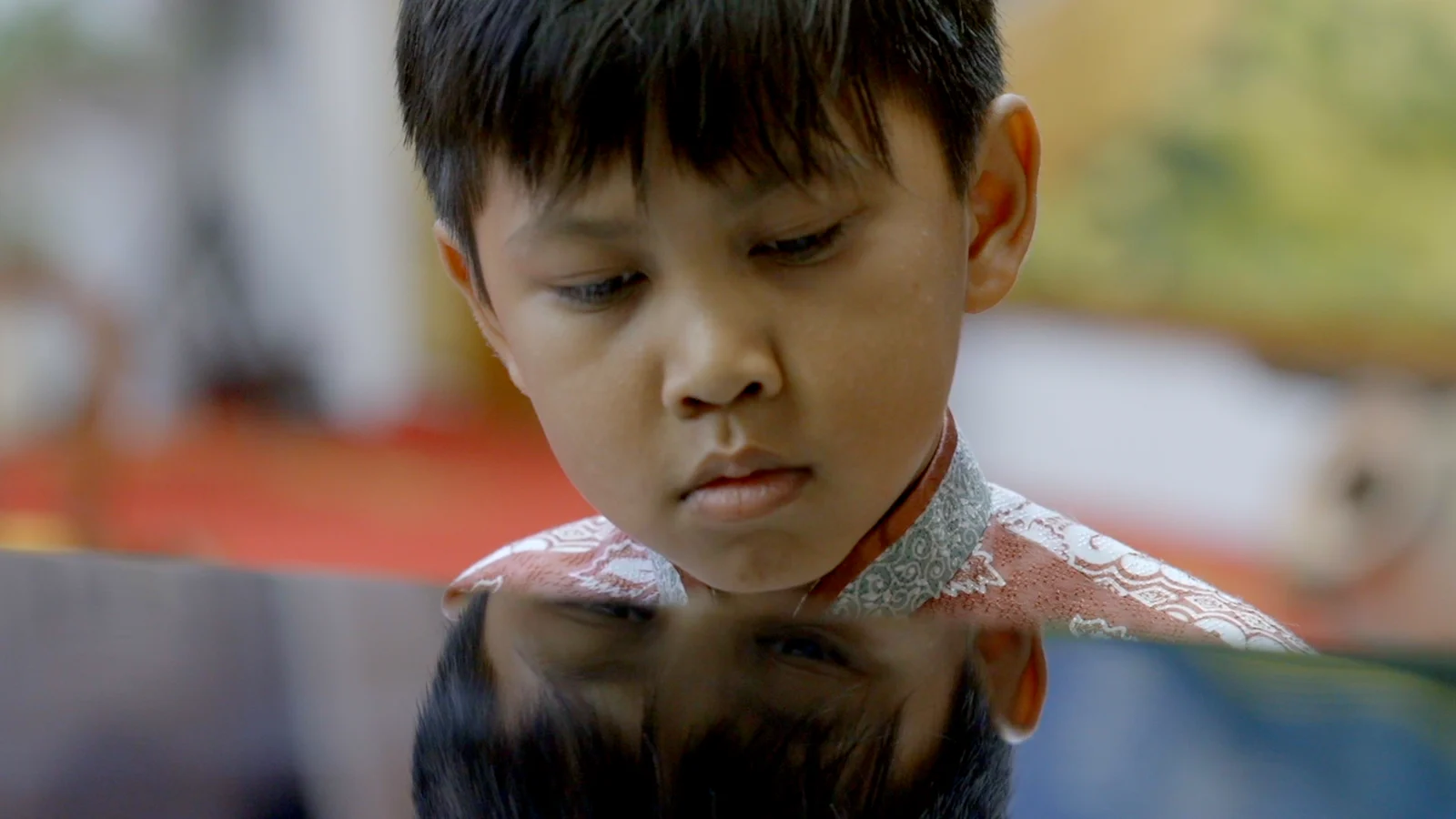
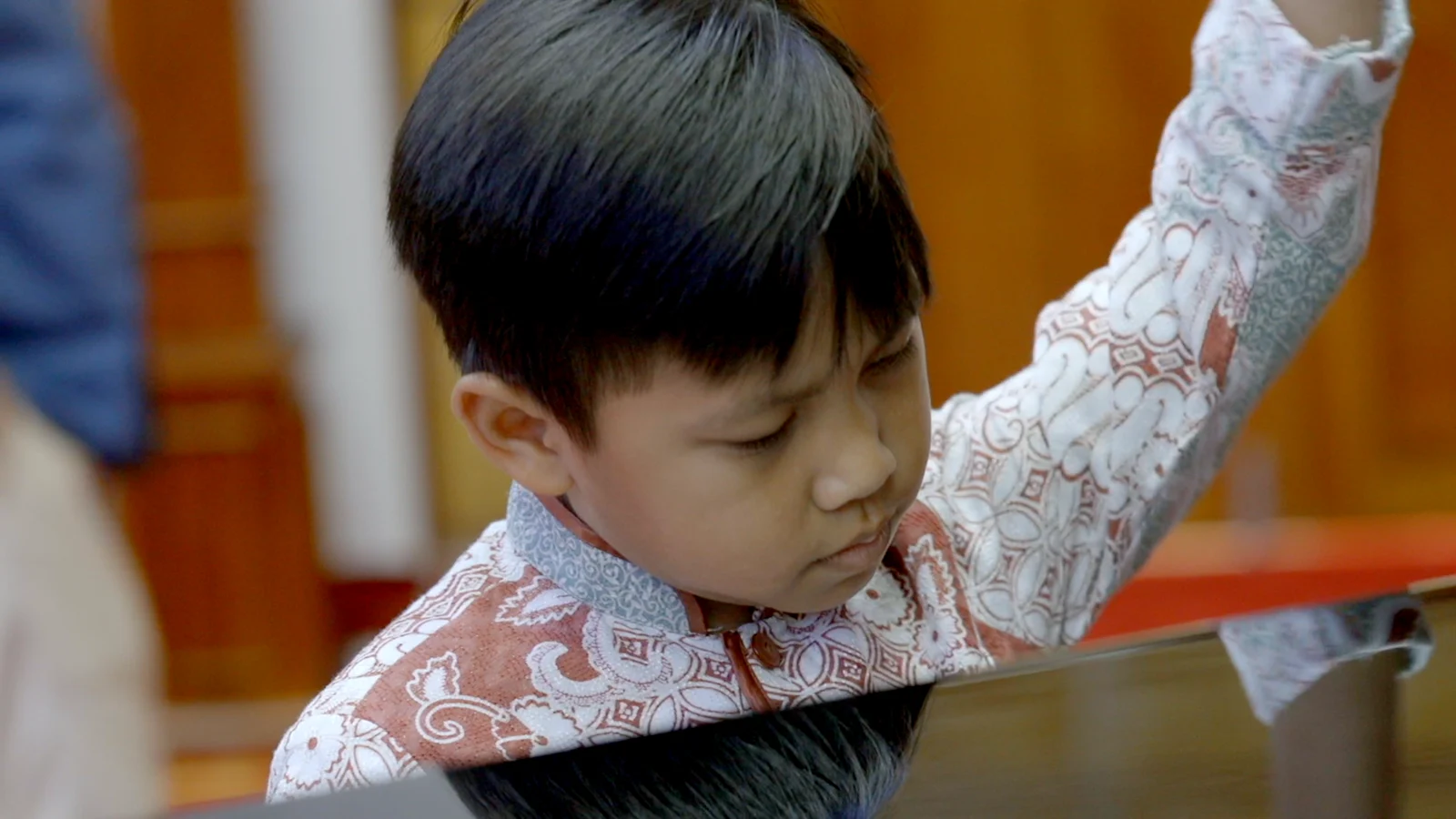
He feels music before he explains it. Afonso drums on his knees when there is no piano in front of him and finds in the keys a way to say what he feels.
Abílio Araújo
Dato Siri Loe II · Father, composer, 3rd President of Timor-LesteDewi Suhandi Araújo
MotherEsther Rouli Christina Sitorus
Piano teacherJosé Ramos-Horta
Nobel Peace Prize laureate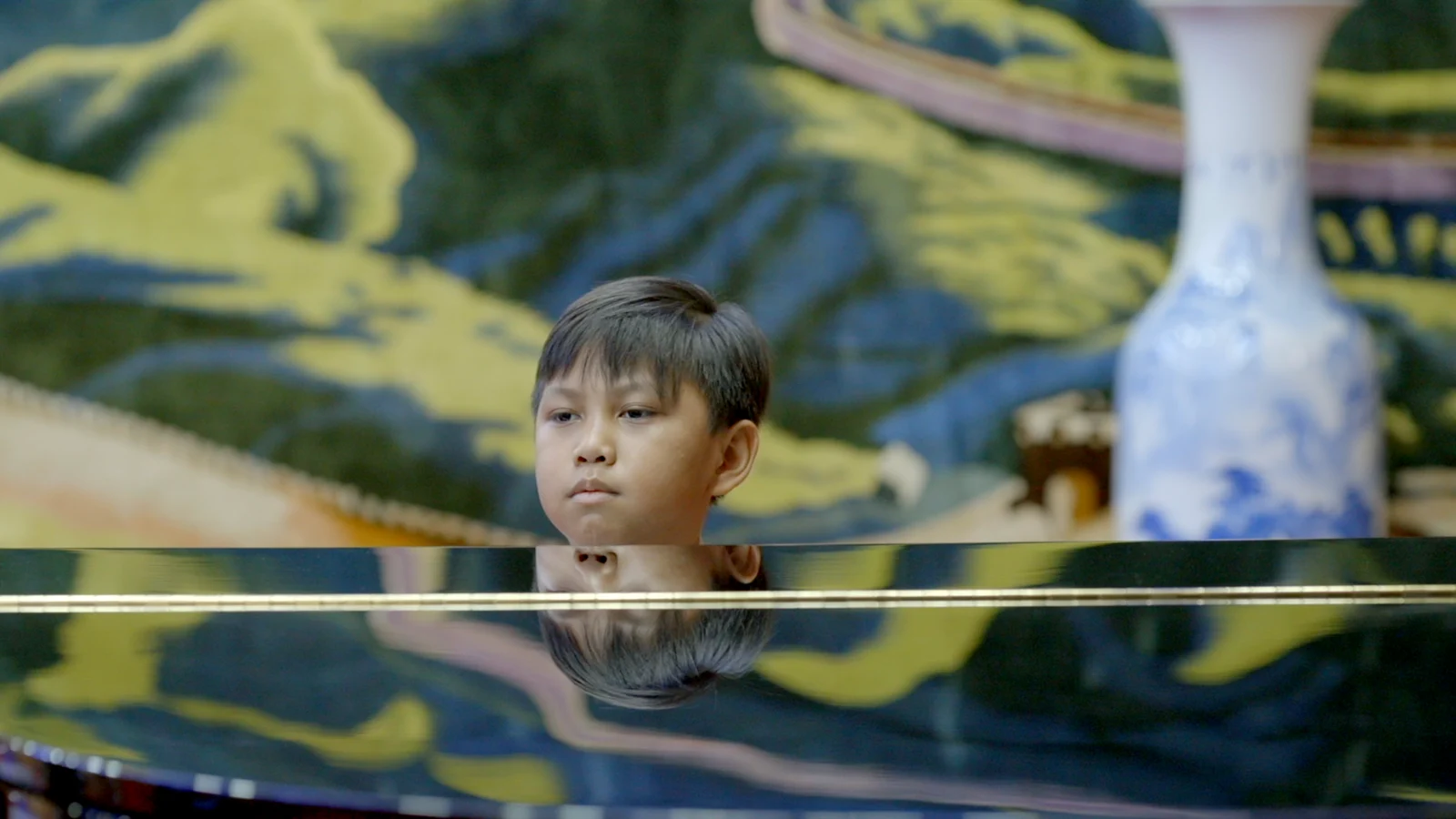
“When the song is happy, I play happy.
Afonso · In the film
When the song is sad, I play sad.”
03 / Video gallery
Two performances by the brothers at the APCS Classical Festival 2024. An encounter with the music running through their story.

Visual example · not yet synchronized to the video
Instrumental performances · APCS Classical Festival 2024
Music in motion
Test: Abílio’s first 20 seconds use an automatic transcription; the rest is an approximate audio visualization.
Reference score
Mozart · Sonata in C major, K. 545 — to be confirmed against this performance. The score is not yet synchronized.
View score on IMSLP ↗04 / Photo gallery
06Film credits
Music · Memory · Identity